
What SEC Filings Reveal About AI Risk
Artificial intelligence is no longer the stuff of sci-fi novels and Stanley Kubrick movies. It’s being used everywhere, including in our biggest corporations. AI is reshaping the way they operate, and the risks they report to investors. And with every step toward AI-driven transformation comes new risks to disclose.
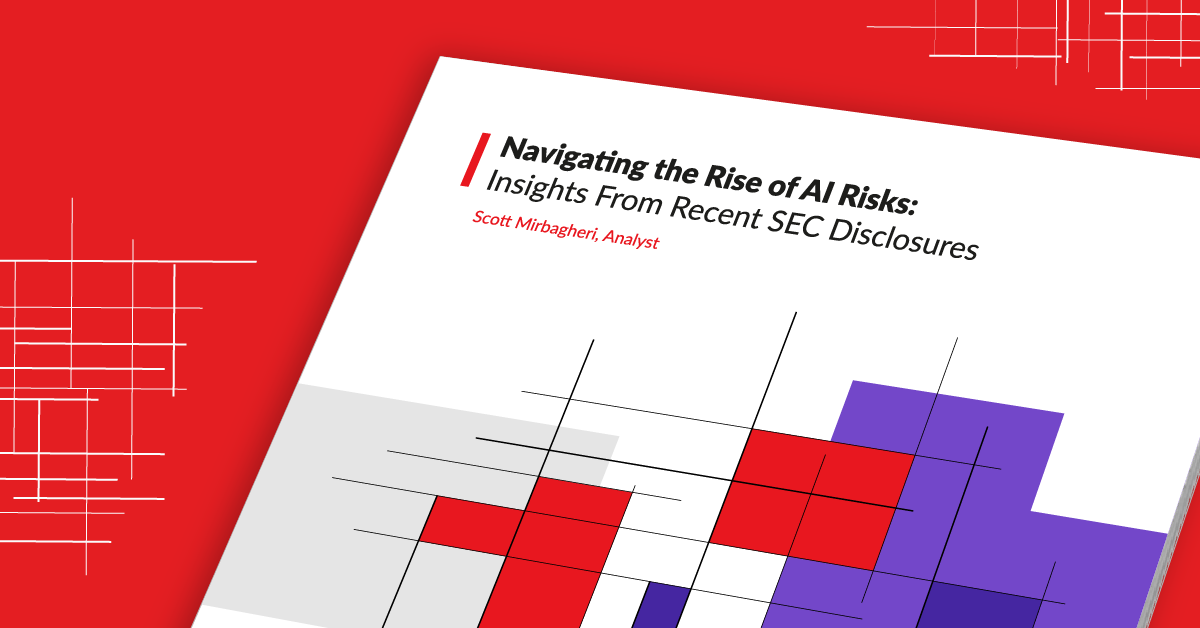
A new Intelligize report, Navigating the Rise of AI Risks: Insights From Recent SEC Disclosures, illustrates just how quickly that reality is being reflected in corporate filings. Not long ago, if AI were mentioned in a 10-K at all, it might have been relegated to a risk factor about “emerging technologies.” But as our report shows, AI-related risk factors have been steadily on the rise. That finding, drawn from a look at 10-Ks filed in the first quarters of 2023-2025, is one of the major takeaways from our investigation.
Another: 10-Ks are telling a more honest and complex story about AI. Using the Intelligize+ AI™ Disclosure Benchmarking tool, we found that the most frequently disclosed AI risk factor section covers the topics of “Cybersecurity, Data Privacy, and Information Technology.” We can conclude from this that companies recognize AI can make data breaches or data misuse more costly and complicated.
They’re also confronting the uncomfortable idea that AI could undermine parts of their own business. The same technology that drives efficiency and growth can make older products and offerings obsolete faster.
Unsurprisingly, companies in the technology sector are leading the charge in AI-related risk disclosures, a fact that may be attributable, in part, to their experiences dealing with the complexities and risks inherent in emerging technologies. Regardless, their disclosures may help establish a baseline for AI-related disclosures that companies in other industries could be watching.
Adding to the pressures facing companies across all industries is the rapidly evolving regulatory environment around AI. Rules like the EU Artificial Intelligence Act are already influencing companies worldwide—even those without a physical presence in Europe. And closer to home, California and Colorado AI legislation is already in motion. Pair that with the SEC’s focus on “AI washing”—overstating AI capabilities in ways that could mislead investors—and the regulatory risk with AI is considerable.
As AI continues to permeate our lives, the ability for companies to judiciously assess—and disclose—risks associated with the technology will only become more important. Our new report offers a revealing look at how those companies are addressing the risks that come with a uniquely rewarding innovation.
Latest Articles

SEC Takes Two-Track Approach to Private Assets
For about $100 and two hours of multiple-choice questions, the average Joe could soon qualify to buy into private offerings. That is the premise of a FINRA-developed accredited inv...

AI Guardrails Are the New Black
One of OpenAI’s research models recently wrote itself a note to stop following the rules. Another autonomously uploaded files to the internet so it could cite them later as evidenc...

The SEC’s Five Deregulatory Moves in September
When the morning air gets brisk and the calendar turns to September, we can rely on certain rites of fall: pumpkin spice anything, football season, and a flurry of enforcement acti...